Sinus and allergy
Sinus health and allergy assessed together, from everyday congestion and hay fever to surgery where it is needed.
Sinus and allergy problems often go hand in hand, and both can leave the nose congested, running or dulled in its sense of smell. Mr Anwar looks for the underlying reason, from chronic sinus inflammation to an allergy, before recommending treatment.
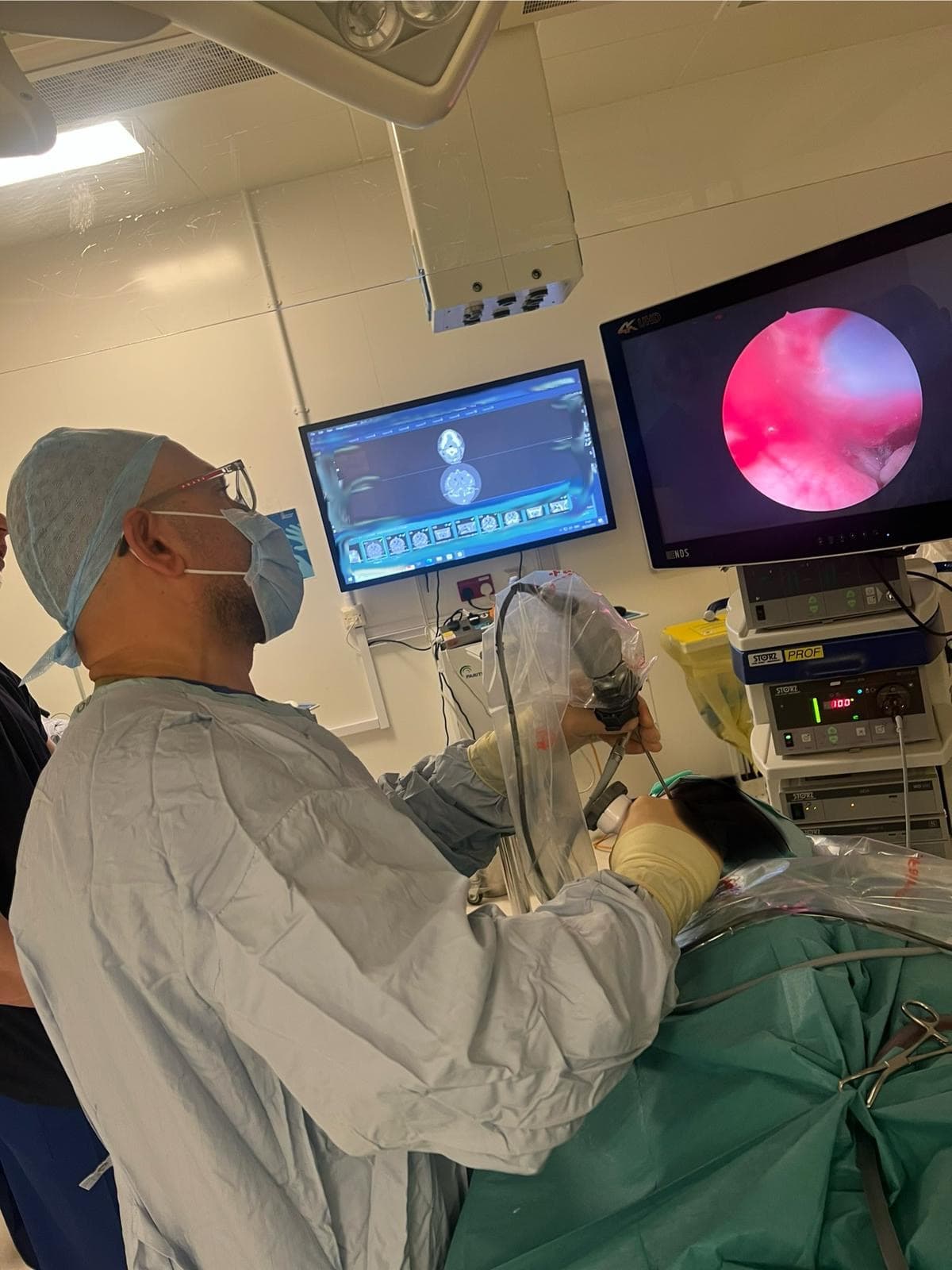
Treatment builds up gently, from sprays, rinses and allergy management to keyhole sinus surgery or a quick clinic procedure where these are the right step. The aim is lasting relief rather than a cycle of short courses of medication.
Conditions
- Sinusitis
- Nasal polyps
- Hay fever
- Allergic rhinitis
- Chronic rhinitis
Procedures
- Sinus surgery
- ClariFix cryotherapy
- Allergy testing
- Immunotherapy referral
Common conditions explained
Allergic rhinitis and hay fever
An allergic reaction in the lining of the nose brings on sneezing, a runny or blocked nose and itchy watery eyes, often with an itchy throat and a reduced sense of smell. It can be seasonal, from grass, tree and weed pollen, or year round, from house dust mite, mould and animal dander. Diagnosis starts with your history and an examination, usually with a skin prick allergy test, and treatment builds up from antihistamines, steroid nasal sprays and saline rinsing to allergen avoidance, with surgery reserved for severe cases that do not settle.
Sinusitis
Sinusitis is inflammation of the sinuses, the air spaces around the nose. Acute sinusitis tends to follow a cold and brings facial pain, congestion, discharge and sometimes fever. Chronic sinusitis lingers for weeks with facial pressure, a blocked nose, reduced smell and discharge. Mr Anwar examines the nose with a fine endoscope in clinic and arranges a CT scan where needed, then treats with a longer course of medication before considering surgery.
Nasal polyps
Polyps are soft, painless swellings in the lining of the nose and sinuses, a little like a cluster of small bags full of mucus. They are not cancerous but can block breathing and smell, and they often go hand in hand with chronic sinusitis. A short course of steroids can shrink them, with endoscopic surgery kept for polyps that keep coming back.
Chronic rhinitis and a persistently runny nose
Chronic rhinitis is long standing inflammation of the lining of the nose, leaving it constantly runny, dripping or blocked without an infection to explain it. It can be allergic, from triggers such as pollen or house dust mite, or non-allergic. One non-allergic form, vasomotor rhinitis, comes from an overactive nerve supply to the lining of the nose, so the nose runs in response to changes in temperature, strong smells or spicy food. Treatment starts with antihistamines, steroid nasal sprays and saline rinsing, and where the overactive nerve is the driver, a targeted treatment that calms it can settle the symptoms without the need for major surgery.
What to expect at your appointment
- A fine flexible or rigid endoscope is used to examine the inside of the nose and sinuses in clinic
- A CT scan of the sinuses is arranged where the picture needs to be confirmed
- Skin prick allergy testing where an allergy is the likely trigger
Procedures explained
Balloon sinuplasty
A minimally invasive way to open a blocked sinus. A small balloon is passed to the sinus opening and gently inflated to widen it, letting trapped mucus drain. It is day surgery with no external scars and a quick recovery. Mr Anwar is accredited for this at Chelsea and Westminster.
Endoscopic sinus surgery
Keyhole surgery through the nostrils using a camera to open blocked sinuses and remove polyps or diseased lining. Where the frontal sinus is involved, balloon dilation can reduce scarring and the chance of needing further surgery.
ClariFix cryotherapy
ClariFix is a minimally invasive clinic treatment for a persistently runny or blocked nose caused by an overactive nerve supply to the lining of the nose, the pattern seen in vasomotor rhinitis. Under local anaesthetic a small device cools and calms that nerve at the back of the nose, the source of the excess mucus and congestion. It takes only a few minutes, needs no cutting and no external scars, and most people return to normal activity the same day, with the benefit building over the following weeks.
Allergy testing
A skin prick test, or a blood test, identifies exactly what you react to, so that avoidance and treatment can be targeted rather than guessed at.
Immunotherapy referral
For allergies that do not settle with the usual treatment, immunotherapy gradually builds your tolerance to the trigger over time, arranged through a specialist service.
Ready to get answers?
Book a consultation and Mr Anwar will guide you from the first appointment.
Book a consultation