Hearing and balance
Hearing, balance and ear comfort assessed with care and explained in plain language, for adults and children alike.
Problems with the ears can affect far more than hearing. They can unsettle your balance, disturb your sleep and wear away at your confidence in conversation. Mr Anwar examines the whole ear, from the canal to the inner ear, so the cause is found rather than guessed at.
Balance is closely tied to the inner ear, so dizziness and unsteadiness are assessed here too. Whether the issue is a simple wax build up, a longstanding hearing concern or a spell of vertigo, you will leave with a clear explanation and a plan that suits your daily life.
Conditions
- Hearing loss
- Tinnitus
- Ear infections
- Glue ear
- Perforated eardrum
- Eustachian tube dysfunction
- Wax build-up
- Vertigo
- Dizziness
- Labyrinthitis
Procedures
- Microsuction
- Grommets
- Balloon Eustachian tuboplasty
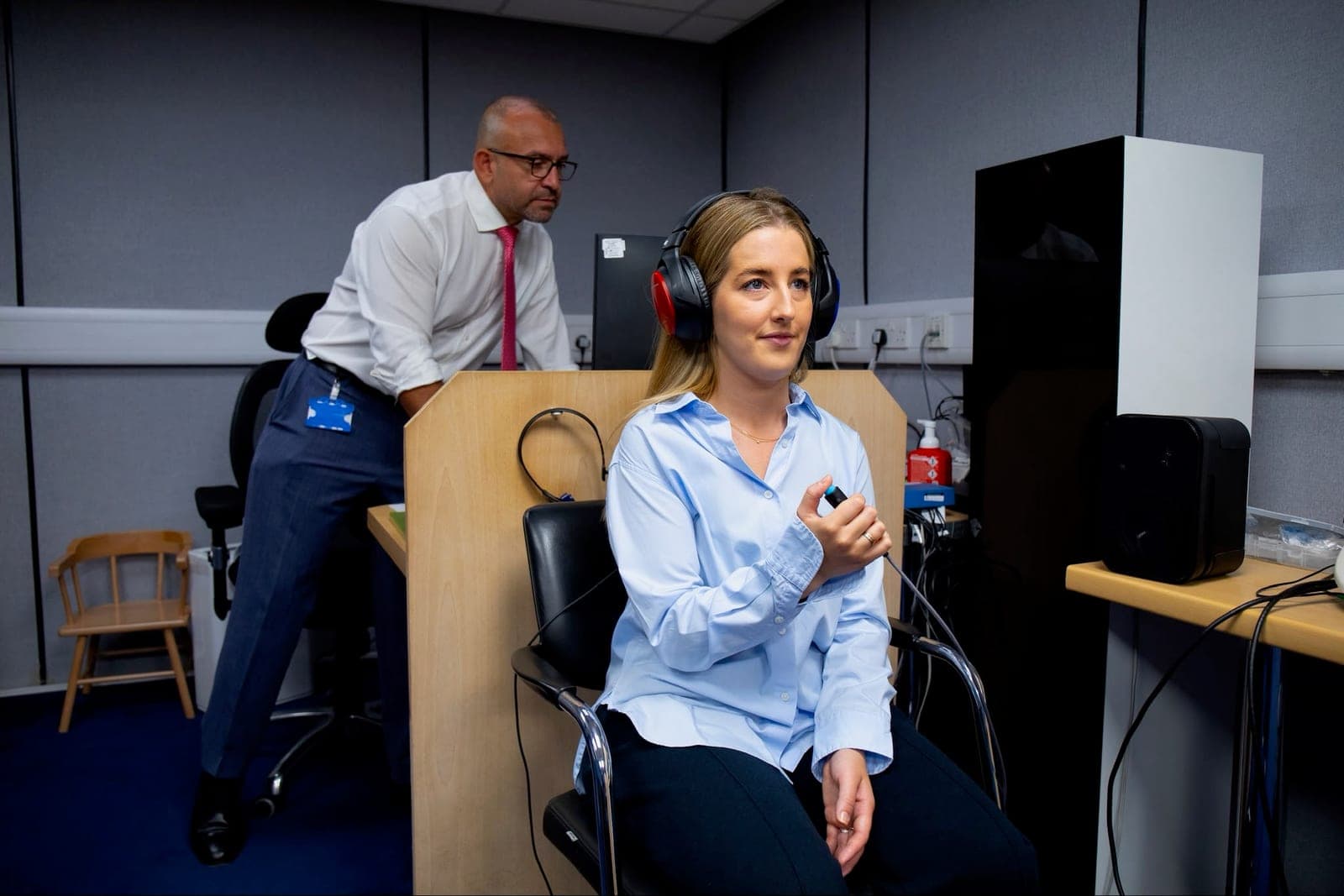
- Hearing assessment
- Balance assessment
Common conditions explained
Hearing loss
Hearing can fade gradually with age or noise exposure, or drop suddenly over hours or days. Mr Anwar examines the ear and arranges a hearing test to work out whether the cause sits in the ear canal, the eardrum and middle ear, or the inner ear, since each points to a different treatment. Sudden hearing loss is treated as urgent.
Ear infections and glue ear
Infections of the ear canal or middle ear cause pain, discharge and muffled hearing. In children a build up of fluid behind the eardrum, known as glue ear, can dull hearing without any pain at all. Most settle on their own, but persistent or recurrent cases are assessed and treated so hearing and, in children, speech are protected.
Tinnitus
Tinnitus is a ringing, buzzing or hissing that only you can hear. It is very common and rarely a sign of anything serious, though it can be wearing. Mr Anwar looks for any treatable cause, checks your hearing, and explains the practical steps that help most people settle it into the background.
Wax build-up
Earwax is normal and protective, but it can build up and block the canal, muffling hearing or causing a feeling of fullness. It is removed gently in clinic by microsuction under a microscope rather than by flushing with water.
Eustachian tube dysfunction
The Eustachian tube connects the middle ear to the back of the nose and keeps the pressure balanced. When it does not open as it should, the ear can feel blocked, full or crackly, hearing sounds muffled and the pressure changes of flying or diving become uncomfortable. Mr Anwar examines the ear and nose and measures the middle-ear pressure to confirm the cause before recommending treatment.
Dizziness and vertigo
Dizziness has many causes, and true vertigo, a spinning sensation, often comes from the balance organ in the inner ear. Mr Anwar takes a careful history, examines the ears and balance, and performs simple bedside manoeuvres to pin down the cause before treating it.
Labyrinthitis and inner-ear balance problems
Inflammation or upset of the inner ear can cause sudden vertigo, imbalance and sometimes a change in hearing. Most settle with time and the right advice, and targeted exercises help retrain the balance system where symptoms linger.
What to expect at your appointment
- Microscopic examination of the ear, with gentle removal of any impacted wax by suction on the day
- A hearing assessment, arranged the same day or within 24 hours where one is needed
- A tympanogram to measure middle-ear pressure where the ear feels blocked or full
- Balance tests where dizziness or unsteadiness is part of the picture
Procedures explained
Microsuction
Wax and debris are removed under a microscope using fine suction, with no water flushing. It is quick, done in clinic and usually gives immediate relief.
Grommets
A tiny tube is placed in the eardrum to drain fluid and restore hearing, most often for glue ear in children. It is a short day-case procedure and the grommet works its own way out over time.
Balloon Eustachian tuboplasty
For a persistently poorly functioning Eustachian tube, a small balloon is passed through the nose and gently inflated inside the tube to widen it and restore normal ventilation of the middle ear. It is a keyhole day-case procedure with no external incision, and it can relieve the blocked, full feeling and pressure problems where medication and nasal treatment have not.
Balance assessment
A set of tests of the inner ear and balance system, with bedside manoeuvres that can both diagnose and, for some kinds of vertigo, treat the problem in the same visit.
Ready to get answers?
Book a consultation and Mr Anwar will guide you from the first appointment.
Book a consultation